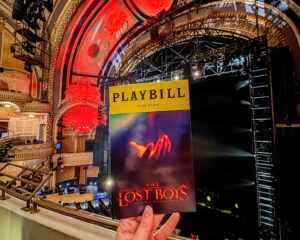
Have you ever wondered what it was like to be in the Palais Garnier the night of the infamous chandelier crash? To be a part of the masquerade? To hear what happened in the dressing rooms as mysterious notes appeared? Masquerade, based on Andrew Lloyd Webber’s Phantom of the Opera, is branded as the world’s first immersive musical and takes audiences into the midst of the iconic romantic tragedy, transforming the former Lee’s Art Shop.
Theatre Meets Theme Park
As both a theme park and theatre enthusiast, I found the production to be nearly a perfect blend of my two interests. From the set structure to the scene transitions, it truly felt like the designers went to a theme park and thought, “We could make this work for Broadway.” Several of the walking paths resembled a Horror Nights maze, including the one leading to the sideshow entrance. A few scenes, such as Carlotta’s dressing room, leveraged Disney’s use of multiple rooms to create a more intimate experience, which became some of my favorite moments. The final moment of the show, Giry’s goodbye as you exit to the Lake Bar, was even a nod to Constance’s farewell in Disneyland’s Haunted Mansion. If you’re a fan of experiences like Le Cirque Arcanus at Epic Universe, this production is for you.
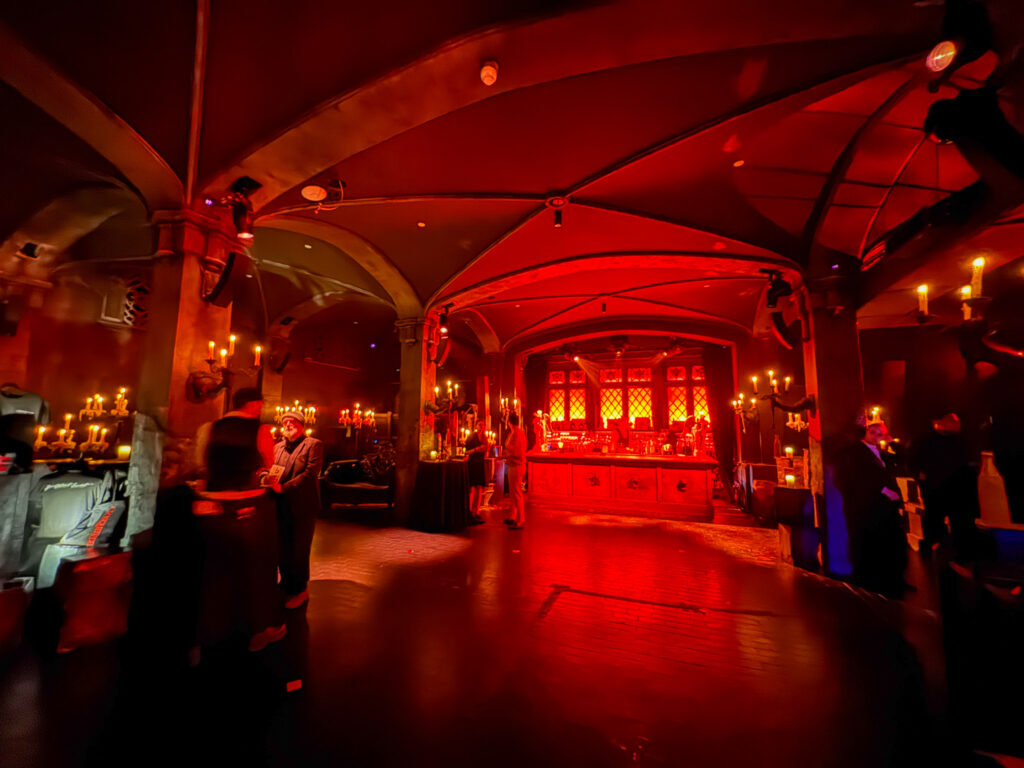
As you’re guided throughout rooms across five floors, you’ll be navigating both elevators and stairs with actors appearing and disappearing at any point. Most of the rooms transform before scenes: the rehearsal room becomes the stage with the famous chandelier crash, the title song is converted to the Lake Bar following the show, and some rooms are almost unrecognizable. It’s easy to be skeptical of the “immersive” title, especially after several similarly branded experiences haven’t quite lived up to the hype. While some small elements like an exit sign or an escalator light may take you out of the 19th-century France feel, the attention to detail from every angle makes “immersive” an accurate description. No wall is left bare from the moment you enter the building; the floors have distinct textures, and a score never lets the mood slip.
Beyond the immersive design, Masquerade embeds active audience participation. As an audience member, your role will fluctuate between a fly-on-the-wall observer and a contributing player to the plot; actors will hand you props (some of which are souvenirs), engage you in conversation, select you to dance with them, like I was pulled for a brief waltz in the title number, and absolutely be present in your personal space. In total, the show is about two hours, but you likely won’t be standing and walking the entire time. Several of the rooms provided seats, though seats weren’t always available for every member of the audience, and your ability to secure one depended completely on where you stood in the crowd and how you filtered through in the scenic transitions.
If you’re a fan of the original Broadway or West End production, you’ll notice that Masquerade does not follow the same order, though all of the key songs and plot points are present. However, the second half of the show feels more linear with the source material, so the pacing feels a bit faster. No matter how familiar you are with its predecessors, the production delivers plenty of unexpected surprises.
What to Know Before You Go
Masquerade is an experience that is incredibly distinct from most other theatrical productions. Thankfully, I felt incredibly prepared, as the friend I went with had seen the show before. Even so, it can still feel overwhelming to a first-timer, even with the show’s detailed FAQ page. So, I’ve added a section on expectations to help you plan your visit.
Unlike a traditional musical, there are stricter expectations for the audience. While it’s always nice to dress up for a show, Masquerade has a dress code that requires black, white, or silver only and prefers elevated attire. While clothing formality is more flexible, I did see the butlers hand out cloaks to those who are adhering to the color scheme. There is a complimentary coat and bag check, and you are required to check all bags (even small ones), but you can keep your phone with you as long as you cover the camera with a sticker, similar to Cabaret at the Kit Kat Club. Coats and outerwear are not needed inside the experience, as there is only one brief outdoor rooftop scene, which is restaged indoors during colder months and inclement weather.
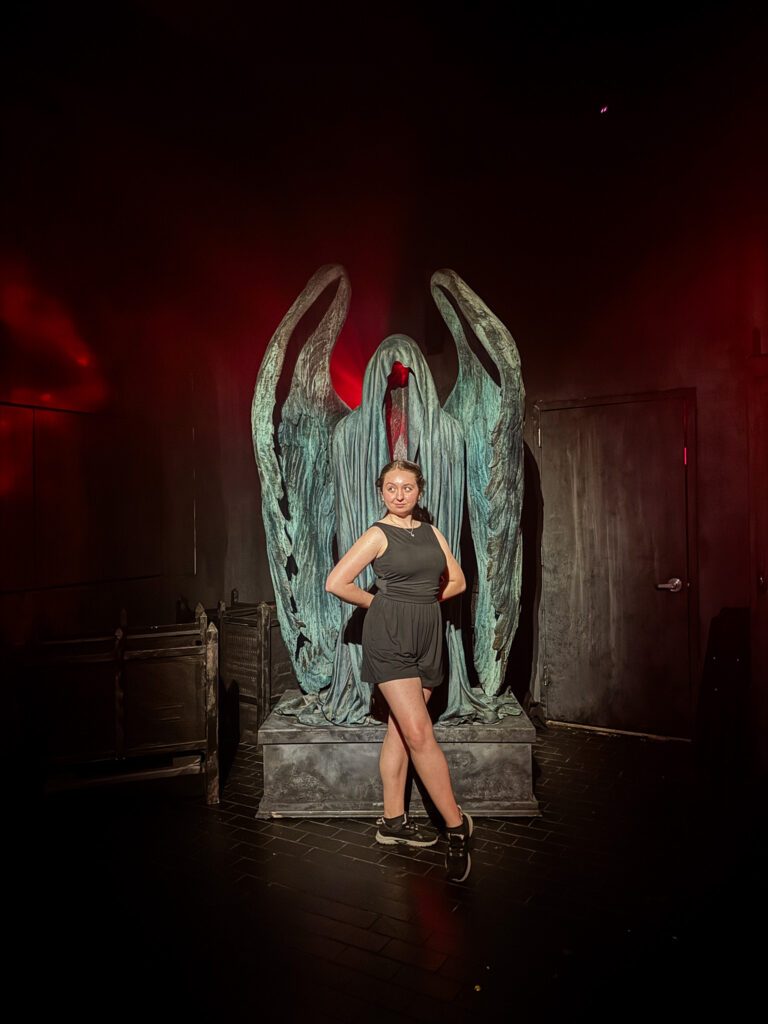
Although a request for elevated attire exists, it is highly recommended that you wear comfortable shoes. You will be walking and standing for nearly the entire two hours, and uneven floor textures make heels impractical. I wore black athletic sneakers with grey trim, and no one commented on my footwear; however, the couple in front of me in line was warned that the stilettos a woman chose could be a problem in some rooms. Masks with a hidden Phantom logo are provided, though you may also bring your own dress-code-compliant mask.
Restrooms are available before and after the performance, but are not accessible during the show itself. As you exit the show and enter the Lake Bar, you’re handed your showbill before being given free rein to explore the lounge with a bar, photo ops, and a merchandise stand. You’re able to head back to bag check to grab your bag and wallet before making purchases, and there’s no rush to leave the lounge after your show, but you’re not able to re-enter the building once you leave. If you’re interested in exploring the Lake Bar without the show, the production team has recently launched public access Tuesday to Sunday, beginning at 9:30 p.m., in addition to specialty nighttime events.
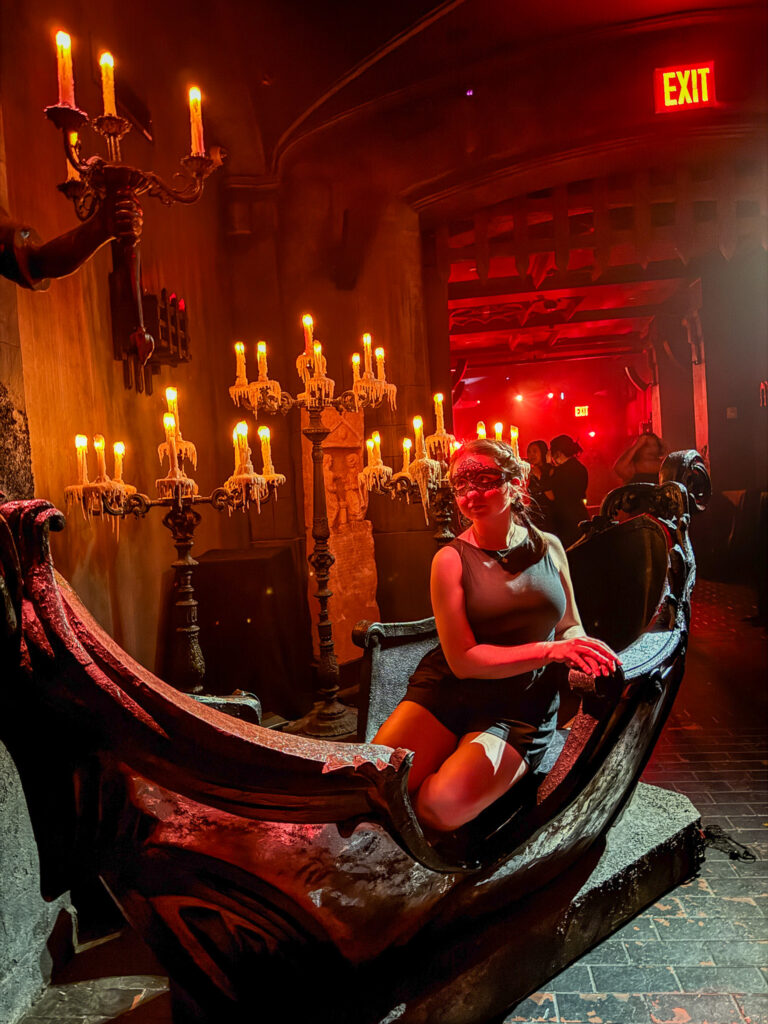
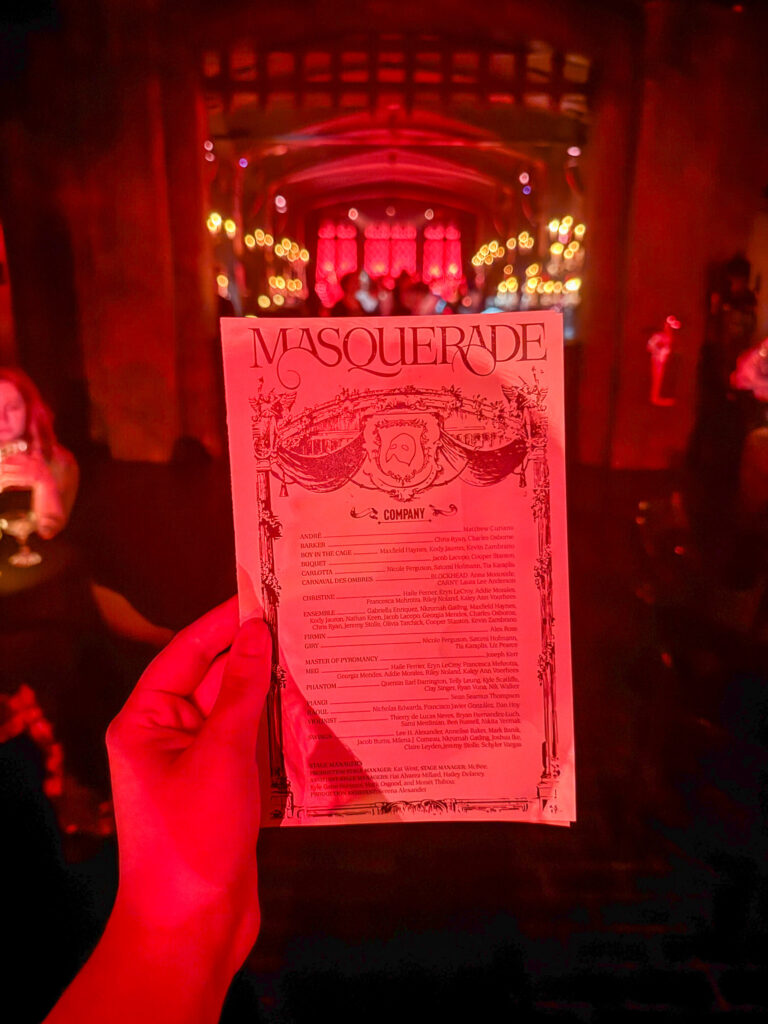
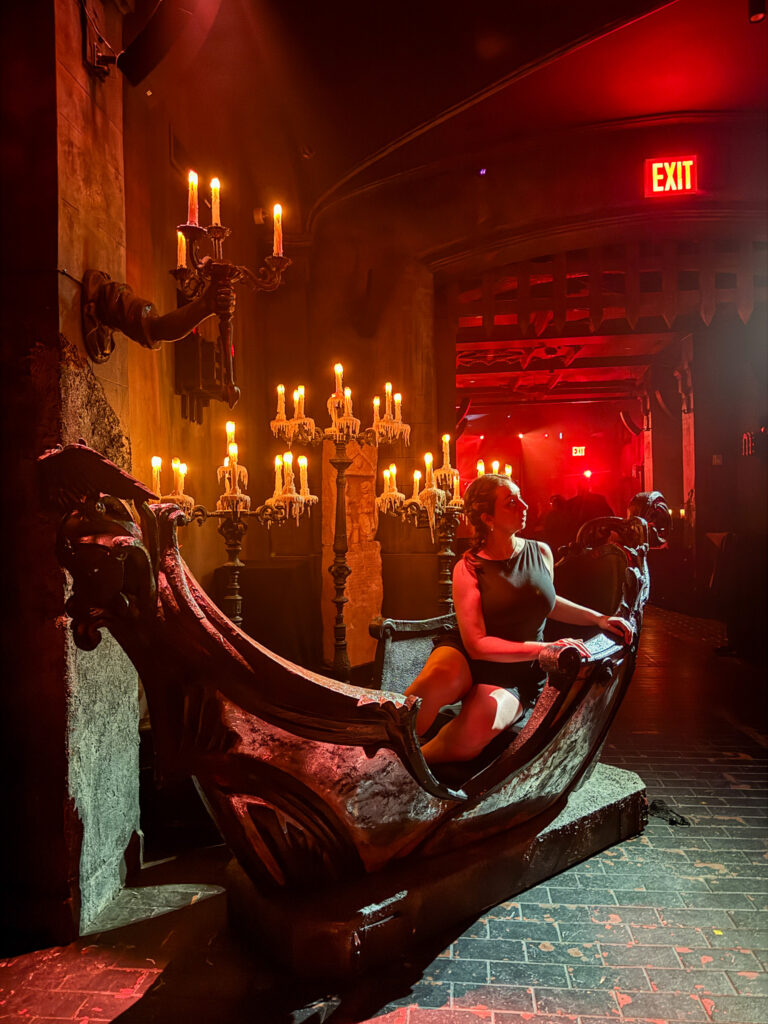
Masquerade is truly a first-of-its-kind experience that could change the game for live entertainment, and I hope its success opens the door to more affordable tickets down the line, particularly the kind that make repeat visits possible rather than a once-in-a-lifetime splurge. Regardless of whether you’re a lifelong Phan or simply curious about what the future of theatre could look like, Masquerade is not to be overlooked.